Breakfast · French
Simple Cheese Omelette
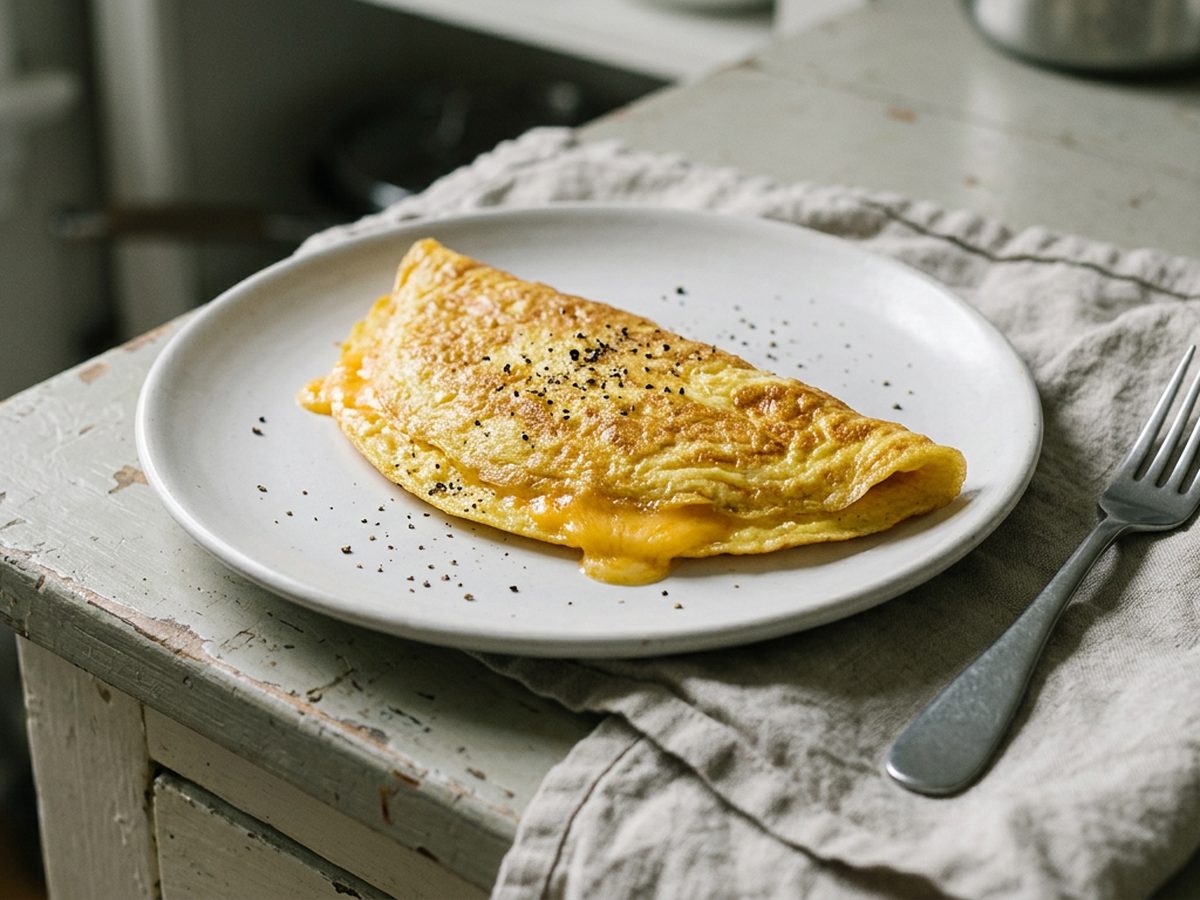
Two eggs, one fold, a lot of melty cheese. Folding is the scary part. It's fine.
- Hands-on
- 6 min
- Total
- 6 min
- Makes
- 1 omelette
- Serves
- 1
All hands-on: 2 minutes to whisk and grate, about 4 minutes at the stove.
- easy
- one-pan
- quick
Verified against at least two trusted test kitchens or food-safety guides · Last checked · What this means
Scaling? Don't make one giant omelette. Cook them one at a time: about 125 ml (1/2 cup) egg mixture per 2-egg omelette, or 175 ml (3/4 cup) for 3 eggs in a 20 cm (8 in) pan. Some items (like eggs) don’t halve neatly: beat them, then measure out half.
Ingredients
You need: 8-inch (20 cm) non-stick frying pan with sloped sides · small bowl · whisk or fork · spatula · grater
Contains: egg · milk
Method
Grate the cheese first
Shred the cheese and keep it next to the stove. Omelettes cook fast, so the filling has to be ready before the eggs go in.
Otto tried this firstOtto starts grating cheese after the eggs hit the pan - by the time he's back, breakfast is overcooked.Whisk
Beat the eggs, water, salt and pepper together until evenly blended.
Heat the pan
Melt the butter in the pan over medium heat, tilting so it coats the bottom.
Ready when: The butter is foaming but not brown, and a drop of water rolls around instead of bursting into steam.
Pour and push
Pour in the eggs. As the edges set, gently push the cooked parts toward the center and tilt the pan so the runny egg flows into the gaps.
Ready when: The egg sets at the edges almost as soon as it hits the pan.
Cook until set
Keep pushing and tilting until the top has thickened and no liquid egg is left.
Ready when: The top has thickened and no visible liquid egg remains; egg dishes are done at 71°C (160°F).
Fill and fold
Scatter the cheese over one half, slide the spatula under the other half and fold it over the cheese.
Otto tried this firstOtto piles on every crumb of cheese and the omelette tears - beginners can tuck in half and sprinkle the rest on top after plating.Melt and serve
Let it cook about 1 more minute so the cheese melts, then slide it onto a plate and eat it hot.
Ready when: The cheese has melted and there's no runny egg inside.
Swaps
- Instead of butter: cooking spray
- Instead of water: milk, or leave it out Milk makes it slightly fluffier; eggs alone give a richer, more custardy omelette.
Make ahead, store & reheat
- Make ahead
- Grate the cheese and prepare any other fillings before you start; the omelette itself is made to order and eaten straight away.
- Storage
- Best eaten right away. Leftovers go in the fridge within 2 hours (1 hour if it is above 90°F / 32°C) and keep 3 to 4 days; reheat until steaming hot, 165°F (74°C).
- Reheat
- Reheat leftovers until steaming hot, 74°C (165°F).
If something goes wrong
- The omelette tears when you fold it
Use less filling (1/3 cup or less) in small pieces; put half inside and scatter the rest on top after plating. - Flat, unevenly cooked omelette
The pan was too big or not hot enough. Use a 20 cm (8 in) pan for 1 to 3 eggs and wait until a drop of water rolls around. - The cheese hasn't melted
Cover the pan for the last minute; it melts the cheese and finishes any undercooked egg.
Good to know
- The pan is hot enough when a drop of water rolls around instead of vanishing in a puff of steam.
- Make omelettes one at a time; for more people, repeat with 2 eggs each.
- Cut any other fillings into small pieces so they don't tear the omelette when you fold it.
Safety
- Eggs can carry Salmonella, which causes food poisoning. Cook until the whites and yolks are firm and no liquid egg is left; egg dishes are done at 160°F (71°C) if you check with a food thermometer.
- Raw egg can spread germs: wash your hands, tools and counter with hot soapy water after cracking and whisking eggs.
- Hot pans and sizzling butter can burn: turn the pan handle inward, and kids should cook with an adult beside them.